
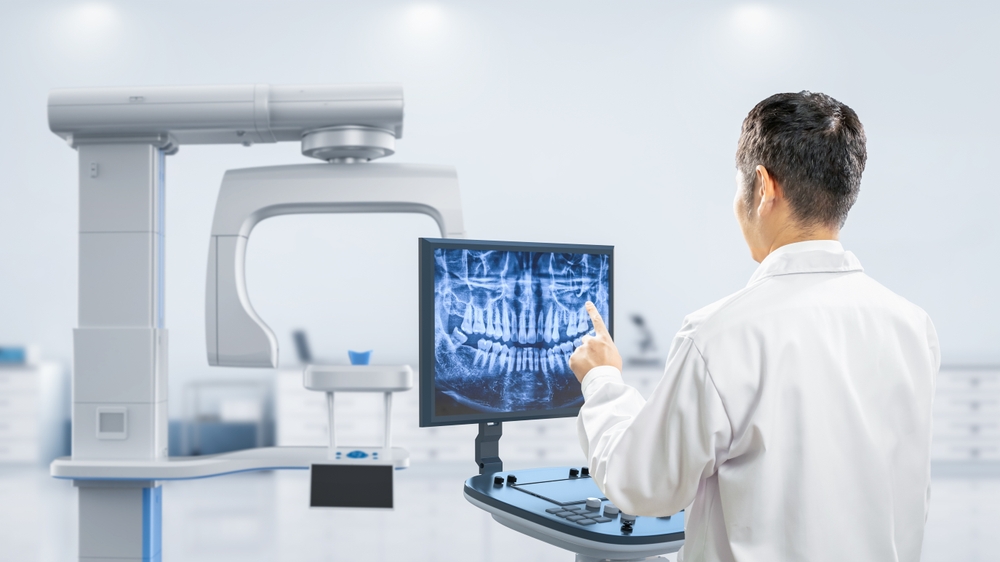
At Delaire Dental in New York, NY, Dr. Michael Lee and Dr. Arielle Scherz have witnessed firsthand how digital X-ray technology has revolutionized modern dentistry. Over the past two decades, dental imaging has transitioned from traditional film-based radiography to highly advanced digital systems that provide faster, more accurate, and safer diagnostic capabilities. This shift has not only improved patient care but also enabled dentists to detect conditions earlier and tailor treatments more precisely. The move toward digital X-rays represents a broader trend in healthcare, emphasizing efficiency, precision, and patient safety.
Digital X-rays use electronic sensors instead of conventional film, capturing images instantly and allowing dentists to view and manipulate them on computers. This instantaneous imaging capability reduces patient wait times, enhances diagnostic accuracy, and facilitates better communication between dental professionals and patients. For practices in urban settings like New York, NY, the adoption of digital imaging has become an essential part of meeting the high demands of patient care while maintaining efficiency.
Moreover, digital X-ray technology has dramatically reduced radiation exposure. With innovations in sensor sensitivity and software enhancement, patients can receive high-quality diagnostic images with a fraction of the radiation required by traditional methods. This has significant implications for patient safety, particularly for children and individuals requiring frequent imaging. Digital X-rays, therefore, represent a convergence of technology, safety, and efficiency that is reshaping dental diagnostics.
Key Technological Advancements in Digital X-Rays
High-Resolution Imaging
One of the most significant advancements in digital X-ray technology is the improvement in image resolution. Modern sensors produce extremely detailed images, allowing dentists to detect even the smallest signs of dental issues such as microfractures, cavities, or early-stage bone loss. This high-resolution imaging supports earlier intervention, which can prevent more complex and costly procedures later. Enhanced image quality also allows for better visualization of soft tissues and surrounding bone structures, making diagnoses more comprehensive and accurate.
3D Imaging and Cone Beam Computed Tomography (CBCT)
Three-dimensional imaging, particularly through cone beam computed tomography (CBCT), has transformed the way dental professionals view anatomical structures. Unlike traditional 2D X-rays, CBCT captures volumetric images that reveal the exact spatial relationships of teeth, bones, and nerves. This technology is invaluable for planning complex procedures such as implants, root canals, and orthodontic treatments. The precision provided by 3D imaging reduces complications during treatment and enhances the overall predictability of outcomes.
Artificial Intelligence Integration
Artificial intelligence (AI) is increasingly integrated into digital X-ray analysis. AI algorithms can automatically detect abnormalities, highlight areas of concern, and even suggest preliminary diagnostic interpretations. This technology acts as a second layer of scrutiny, assisting dentists in making faster and more accurate decisions. Over time, AI systems continue to learn from new cases, improving their diagnostic performance and contributing to more personalized patient care.
Advantages of Digital X-Rays in Dentistry
Digital X-ray technology offers numerous advantages over traditional radiography, which extend beyond just image clarity. Key benefits include:
- Reduced radiation exposure, enhancing patient safety
- Instant image capture, eliminating film processing delays
- Easy storage and retrieval of images in electronic health records
- Enhanced patient education through visual aids and image manipulation
- The ability to share images with specialists remotely for collaborative care
In addition to these practical benefits, digital X-rays contribute to better environmental sustainability. Traditional film X-rays rely on chemical processing, which produces hazardous waste. Digital systems, by contrast, eliminate the need for these chemicals, reducing the ecological footprint of dental practices.
Future Directions in Digital X-Ray Technology
The future of dental imaging continues to be shaped by technological innovation. Researchers are exploring ways to integrate augmented reality with digital X-rays, allowing dentists to visualize treatment plans directly on a patient’s anatomy in real time. Additionally, ongoing improvements in AI and machine learning are expected to further enhance diagnostic accuracy and streamline workflow, reducing human error and optimizing patient outcomes.
Portable and wireless digital X-ray devices are also becoming more common, allowing for flexible imaging in a variety of clinical settings. As these technologies become more accessible, they are likely to redefine standard practices in dentistry, making advanced diagnostics available to a broader range of patients.
At Delaire Dental in New York, NY, Dr. Michael Lee and Dr. Arielle Scherz continue to observe how these advancements shape modern dentistry. The evolution of digital X-ray technology reflects a broader commitment to precision, safety, and innovation, transforming how dental care is delivered and experienced.
Resources
McDavid, W. D., & Drexler, R. J. (2018). Digital Radiography in Dentistry: Principles and Practice. Journal of Dental Research.
Patel, S., & Durack, C. (2017). Cone Beam Computed Tomography in Endodontics. International Endodontic Journal.
Farman, A. G. (2019). The Evolution and Future of Dental Imaging. Oral Surgery, Oral Medicine, Oral Pathology, Oral Radiology.