
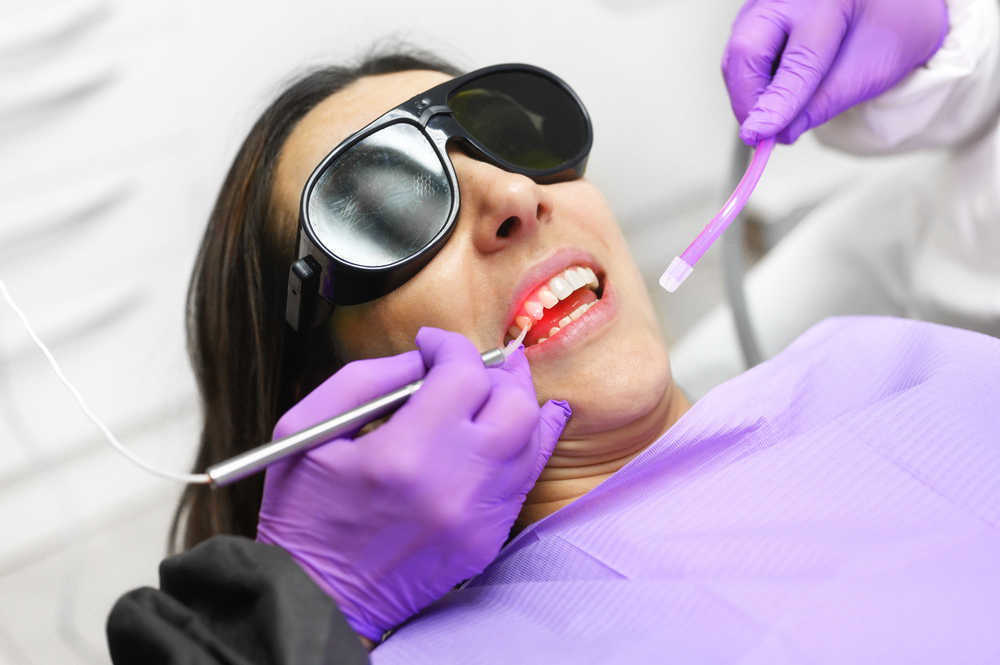
Dental technology has advanced significantly over the past few decades, and one of the most innovative tools in modern dentistry is the laser. At Delaire Dental in New York, NY, Dr. Michael Lee and Dr. Arielle Scherz emphasize that lasers are transforming how dentists approach both routine and complex dental procedures. Lasers use focused light energy to target tissues in the mouth with precision, providing a less invasive option compared to traditional methods. Understanding how lasers work and their applications can help patients appreciate their role in modern oral care.
Lasers are versatile tools that operate at different wavelengths, allowing dentists to treat soft tissues, hard tissues, or both depending on the procedure. Unlike traditional drills or scalpels, lasers often reduce the need for anesthesia, minimize bleeding, and promote faster healing. Patients can benefit from decreased discomfort, shorter recovery times, and reduced risk of infection when lasers are used. This technology represents a significant shift in dentistry, moving toward more precise, patient-friendly treatments.
The use of lasers also offers psychological benefits for patients. Dental anxiety is a common barrier to seeking care, and the non-invasive nature of laser procedures can help alleviate fear associated with traditional dental tools. By educating patients about lasers, dental professionals help create a more comfortable and confident experience for those visiting the office.
How Lasers Are Used in Dental Procedures
Lasers in dentistry have multiple applications across preventive, restorative, and cosmetic procedures. They are commonly used to treat gum disease by removing infected tissue and promoting healing in a controlled manner. In addition, lasers can assist in cavity removal and preparation for fillings without affecting surrounding healthy tooth structure. This precision reduces trauma to the area and can result in less post-procedure sensitivity.
Another application is in cosmetic dentistry, where lasers can reshape gum tissue for a more balanced smile or remove pigmentation irregularities. Lasers are also used to treat cold sores, canker sores, and other oral lesions, providing quick relief and encouraging faster tissue regeneration. In some cases, laser therapy is used to whiten teeth by accelerating bleaching agents while protecting soft tissues.
- Common dental laser uses include:
- Treating periodontal disease
- Removing decayed tooth material
- Reshaping gums for cosmetic purposes
- Treating oral lesions and sores
- Accelerating teeth whitening procedures
The range of applications demonstrates the flexibility and efficiency of laser technology in dental care, providing benefits for both oral health and aesthetics.
Advantages and Considerations
Dental lasers offer numerous advantages, but it is important to understand the considerations involved. One of the primary benefits is precision. Lasers can target specific areas without affecting surrounding tissues, which reduces trauma and promotes quicker healing. Bleeding is minimized because lasers can coagulate blood vessels as they work, making procedures cleaner and more efficient.
Patients often experience less discomfort during and after treatment due to reduced swelling and inflammation. Healing times can be faster, and the risk of infection may be lowered because lasers sterilize the area as they cut. Additionally, lasers often reduce the need for stitches or other surgical interventions, making procedures less invasive overall.
While lasers are highly effective, not all dental procedures are suitable for laser use. The type of laser, wavelength, and specific dental needs must be carefully evaluated to ensure optimal outcomes. Education and awareness about laser technology allow patients to understand both the benefits and limitations, empowering them to make informed decisions about their dental care.
Conclusion
Lasers have become an important tool in modern dentistry, providing precise, minimally invasive options for a variety of procedures. At Delaire Dental in New York, NY, Dr. Michael Lee and Dr. Arielle Scherz highlight that understanding the role of lasers in oral health helps patients appreciate the evolving technology in dental care. By reducing discomfort, promoting faster healing, and offering targeted treatment, lasers contribute to improved outcomes and a more positive dental experience. Patients who are informed about the applications and benefits of lasers are better prepared to engage in discussions about their oral health and make educated decisions regarding their care.
Resources
- Coluzzi, D. J. (2002). Fundamentals of dental lasers: Science and instruments. Dental Clinics of North America.
- Parker, S. (2016). Laser dentistry: Current applications and outcomes. Journal of the American Dental Association.
- Romanos, G. E., & Nentwig, G. H. (2000). Use of lasers in periodontal therapy: A review. Journal of Clinical Periodontology.