
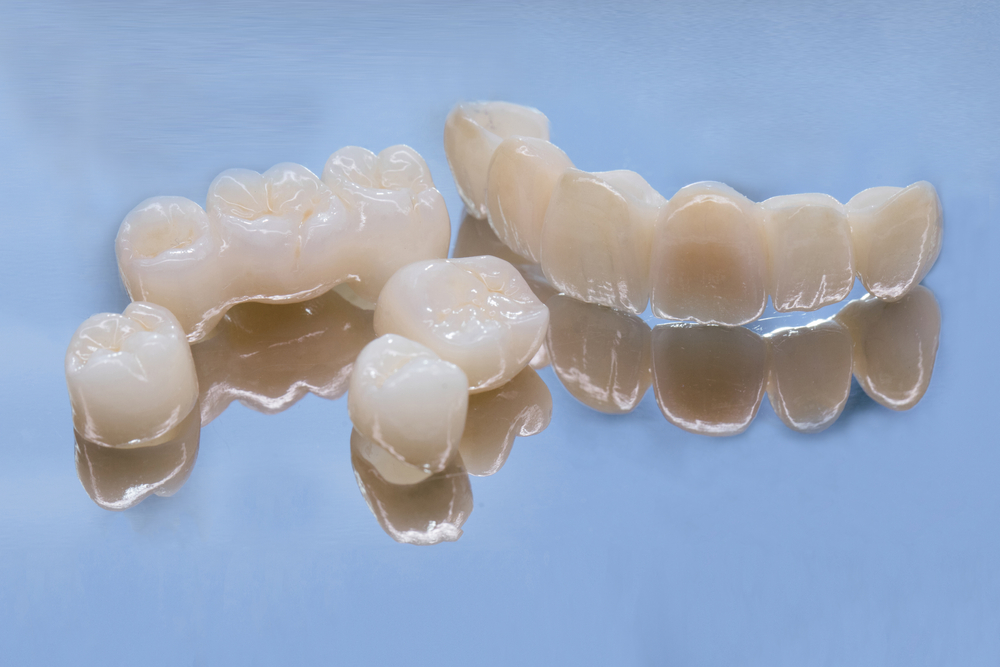
At Delaire Dental in New York, NY, patients often ask whether crowns or veneers are the right option for improving their smiles. Both treatments enhance the appearance of teeth while also providing structural benefits. However, their purposes, materials, and applications differ in important ways. Dr. Michael Lee and Dr. Arielle Scherz often emphasize that understanding these differences helps patients make informed decisions about their oral health.
While both crowns and veneers are custom-made restorations, they address different dental concerns. Crowns are often used for teeth that are damaged or weakened, while veneers are typically placed for cosmetic improvements. Choosing between the two depends on the condition of the tooth, the patient’s goals, and the long-term maintenance required.
Understanding Dental Crowns
A dental crown is a cap that covers the entire tooth, restoring its shape, size, strength, and appearance. Crowns are usually recommended when a tooth has been significantly weakened by decay, large fillings, or fractures. They are also used after root canal treatment or when a tooth is misshapen. By fully encasing the tooth, crowns provide stability and protection, allowing the tooth to function normally again.
Crowns can be made from materials such as porcelain, ceramic, metal alloys, or a combination of these. Porcelain and ceramic crowns are especially popular for front teeth because they blend naturally with surrounding teeth. One of the main advantages of crowns is their durability, with many lasting a decade or more when properly cared for. However, because crowns require more reshaping of the tooth structure, the process is slightly more invasive compared to veneers.
Understanding Dental Veneers
Veneers are thin shells, usually made of porcelain, that are bonded to the front surface of teeth. They are primarily cosmetic, designed to correct issues such as discoloration, minor misalignment, small gaps, or uneven shape. Unlike crowns, veneers do not cover the entire tooth; instead, they enhance the visible portion, making them an excellent choice for improving smiles with minimal structural damage.
The process of placing veneers typically involves removing a very thin layer of enamel to ensure a proper fit. Because only the front surface of the tooth is altered, veneers are considered a more conservative treatment option. Patients often choose veneers to achieve dramatic aesthetic improvements in a relatively short period of time. With proper care, veneers can last for many years, though they may not offer the same level of protection as crowns for heavily damaged teeth.
Comparing Crowns and Veneers
Although both crowns and veneers improve the appearance of teeth, their applications differ significantly. Crowns are designed to restore function and provide strength, while veneers primarily enhance aesthetics. Crowns are ideal for patients with teeth that are weakened, cracked, or require full coverage after extensive dental work. Veneers, on the other hand, are suited for those who want to address cosmetic concerns without altering the entire tooth structure.
Another important consideration is the amount of tooth preparation required. Crowns involve reshaping the tooth more extensively, while veneers require minimal enamel removal. From a cost perspective, both can represent a significant investment, but the long-term benefits of preserving or enhancing a smile often outweigh the expense. Deciding between crowns and veneers involves weighing structural needs against cosmetic goals.
Factors to Consider Before Choosing
When deciding between crowns and veneers, patients should consider several key factors. These include the health of the tooth, the desired outcome, and the longevity of the restoration. For example, a tooth that is severely weakened or has undergone root canal therapy often benefits most from a crown. Conversely, a healthy tooth with cosmetic imperfections is a better candidate for a veneer.
Other factors such as oral hygiene, habits like teeth grinding, and financial considerations also play a role. Patients should discuss their expectations with their dentist to ensure the chosen treatment aligns with both short- and long-term goals. In some cases, a combination of crowns and veneers may be recommended to achieve the best functional and cosmetic results. By carefully weighing these elements, patients can make a confident, informed choice.
Conclusion
Both crowns and veneers serve valuable purposes in dentistry, but their suitability depends on the unique needs of each patient. At Delaire Dental in New York, NY, patients are encouraged to understand the distinctions between these treatments so they can choose wisely. Dr. Michael Lee and Dr. Arielle Scherz emphasize that preserving oral health while enhancing aesthetics is always the ultimate goal. By learning the differences between crowns and veneers, individuals can take meaningful steps toward achieving a strong, healthy, and beautiful smile.
References
Christensen, G. J. (2009). Veneers vs. Crowns: Which Option Is Better? Journal of the American Dental Association.
Pjetursson, B. E., Sailer, I., & Zwahlen, M. (2007). A Systematic Review of the Survival and Complication Rates of All-Ceramic and Metal-Ceramic Reconstructions. International Journal of Prosthodontics.
Layton, D. M., & Walton, T. R. (2007). An Up to 16-Year Prospective Study of Porcelain Veneers. International Journal of Prosthodontics.