
A brighter smile is a common cosmetic goal, but choosing a whitening method can be confusing when there are so many options available. At Delaire Dental in New York, NY, patient education is an important part of understanding how different cosmetic approaches work. Two of the most common categories are in-office whitening and at-home whitening. Both are designed to reduce certain types of tooth discoloration, but they differ in the concentration of whitening agents, treatment time, level of professional supervision, and how quickly changes may become noticeable.
Most teeth whitening methods rely on peroxide-based ingredients that penetrate the tooth and break down stain-causing compounds. The best approach depends on several factors, including the type of discoloration, existing dental work, tooth sensitivity, oral health, desired timeline, and personal preferences. Understanding the differences between in-office and at-home methods can help patients make more informed decisions rather than simply choosing the strongest or fastest option.
How In-Office Teeth Whitening Works
In-office whitening is performed under professional supervision and typically uses a higher concentration of whitening agent than products intended for unsupervised home use. Before treatment, the teeth and gums may be evaluated to identify concerns such as cavities, cracks, gum recession, or existing sensitivity. Protective measures are generally used to limit contact between the whitening material and the gums or other soft tissues.
One of the primary advantages of in-office whitening is speed. Because stronger whitening formulations can be used in a controlled setting, noticeable changes may often be achieved during a relatively short treatment period. The exact outcome varies according to the starting shade and cause of discoloration. Teeth with yellow-toned staining related to food, beverages, tobacco, or aging often respond differently than teeth with gray, brown, or internally caused discoloration.
How At-Home Teeth Whitening Works
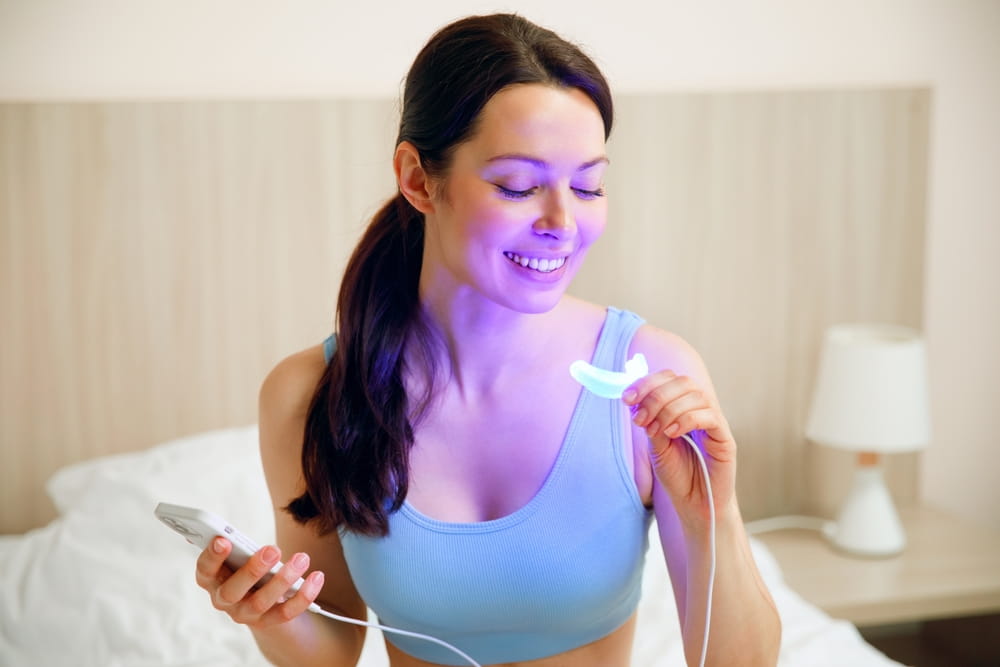
At-home whitening includes several different approaches. Professionally supervised systems may use custom-fitted trays and whitening gel that patients apply according to specific instructions over a period of days or weeks. Over-the-counter options include whitening strips, gels, rinses, toothpastes, and generic trays. These products vary considerably in their active ingredients, concentrations, application methods, and expected results.
At-home whitening generally produces changes more gradually than in-office treatment. This slower process may appeal to patients who prefer to control when and where they whiten their teeth. However, consistency is important. Skipping applications, using too much product, or extending treatment beyond recommended guidelines may affect results or increase sensitivity. It is also important to remember that whitening toothpastes mainly remove surface stains and typically do not change the internal shade of teeth to the same extent as peroxide-based bleaching products.
Comparing the Speed and Degree of Whitening
The most noticeable difference between in-office and at-home whitening is usually the timeline. In-office treatment is designed to create a more concentrated whitening effect within a shorter period. This may be useful for someone preparing for a wedding, professional event, photography session, or another occasion where timing matters. However, faster does not necessarily mean that every tooth will reach the same shade or that the results will be permanent.
At-home whitening typically requires repeated applications before the full effect becomes visible. The gradual nature of treatment can make it easier to stop once a preferred shade is reached. Results depend on product strength, frequency of use, starting tooth color, and the biological characteristics of the teeth. Neither approach can guarantee a specific shade because natural tooth structure and the source of discoloration strongly influence how teeth respond.
Sensitivity and Gum Irritation With Whitening
Temporary sensitivity is one of the most common concerns associated with teeth whitening. Peroxide-based products can temporarily increase sensitivity to cold, air, or certain foods. People who already have sensitive teeth, gum recession, enamel wear, exposed root surfaces, or small cracks may be more likely to experience discomfort. Sensitivity can occur with either in-office or at-home whitening.
Professional supervision can be particularly helpful for patients with a history of sensitivity because the whitening approach may be adjusted according to individual needs. At-home products also require careful use. Poorly fitting trays or whitening strips that repeatedly contact the gums can contribute to irritation. Using more whitening gel or leaving a product on longer than instructed does not necessarily improve the outcome and may instead increase discomfort.
Why the Cause of Discoloration Matters
Not every type of tooth discoloration responds equally well to whitening. Surface stains caused by coffee, tea, red wine, tobacco, and certain foods may respond favorably, while deeper intrinsic discoloration can be more challenging. Changes caused by certain medications, dental trauma, developmental factors, or alterations within the tooth may respond slowly or incompletely to conventional bleaching.
When discoloration does not respond predictably to whitening, other cosmetic approaches may sometimes be considered. Porcelain veneers, for example, can alter the visible color as well as the shape and proportions of selected teeth. The appropriate option depends on the cause of the cosmetic concern and the condition of the underlying teeth. This is why determining the source of discoloration is an important step before beginning repeated whitening treatments.
How Existing Dental Work Affects Whitening Results
Whitening agents work on natural tooth structure but do not lighten most restorative materials in the same way. Crowns, veneers, fillings, bonding, and inlays and onlays generally retain their existing shade during whitening. If these restorations are located in visible areas, whitening the surrounding natural teeth may create an uneven color match.
This consideration can be especially important for patients planning multiple cosmetic or restorative treatments. In some cases, whitening may be performed before selecting the final shade of a new restoration so that the restoration can be matched to the desired tooth color. Because tooth shade may stabilize after whitening, treatment sequencing should be considered carefully rather than viewing whitening as an isolated cosmetic procedure.
Comparing Convenience and Control
Convenience means different things to different patients. In-office whitening may be appealing to someone who wants treatment completed under professional supervision without managing repeated applications at home. The shorter overall treatment timeline can also be helpful for people with busy schedules who prefer a more concentrated approach.
At-home whitening provides greater flexibility because treatment can be incorporated into a daily routine. Professionally supervised trays may offer a balance between home convenience and individualized guidance. Over-the-counter products are widely accessible, but their generic design may not provide the same fit or degree of customization. Whichever approach is used, following instructions carefully is essential for balancing effectiveness with comfort and safety.
Maintaining Results After Teeth Whitening
Neither in-office nor at-home whitening permanently prevents future discoloration. Teeth naturally change color over time, and lifestyle habits can influence how quickly staining returns. Coffee, tea, red wine, dark sauces, tobacco, and other highly pigmented substances may contribute to renewed staining after whitening.
Consistent brushing, flossing, professional cleanings, and routine dental care can help maintain a healthy, brighter appearance. Rinsing with water after consuming strongly pigmented foods or beverages may also reduce the amount of time staining substances remain in contact with enamel. Some people choose periodic whitening touch-ups, but frequency should be based on individual needs rather than continuously attempting to achieve an increasingly lighter shade.
Choosing Between In-Office and At-Home Whitening
There is no single whitening method that is ideal for everyone. In-office whitening may be preferred when faster results and direct professional supervision are priorities, while at-home whitening may suit patients who prefer gradual changes, scheduling flexibility, and greater control over the process. The condition of the teeth and gums, degree of sensitivity, type of staining, existing restorations, and desired outcome should all be considered.
For patients in New York, NY, understanding these differences can make cosmetic dental decisions easier and more realistic. Dr. Michael Lee and Dr. Arielle Scherz of Delaire Dental emphasize the value of considering oral health alongside cosmetic goals when evaluating whitening options. Whether someone chooses an in-office or at-home approach, the goal should be a healthy, natural-looking result achieved through an appropriate method rather than simply pursuing the brightest possible shade.
Resources
Carey, C. M. (2014). Tooth Whitening: What We Now Know. Journal of Evidence-Based Dental Practice.
Joiner, A. (2006). The Bleaching of Teeth: A Review of the Literature. Journal of Dentistry.
American Dental Association Council on Scientific Affairs. (2009). Tooth Whitening/Bleaching: Treatment Considerations for Dentists and Their Patients. American Dental Association.